Work for Hire
Or, How to Not Own What You Create

My first many novels were what are called, in the trade, “tie-in novels” or “licensed fiction.” Both terms mean basically the same thing: the underlying intellectual property (in my case, Gen13 and Buffy the Vampire Slayer and Angel) is owned by somebody else, and therefore, what I write in that universe is also owned by that somebody. Doing that work is also called work for hire (or WFH), because, like anybody who’s hired for any job, you’re working on behalf of whoever hired you.
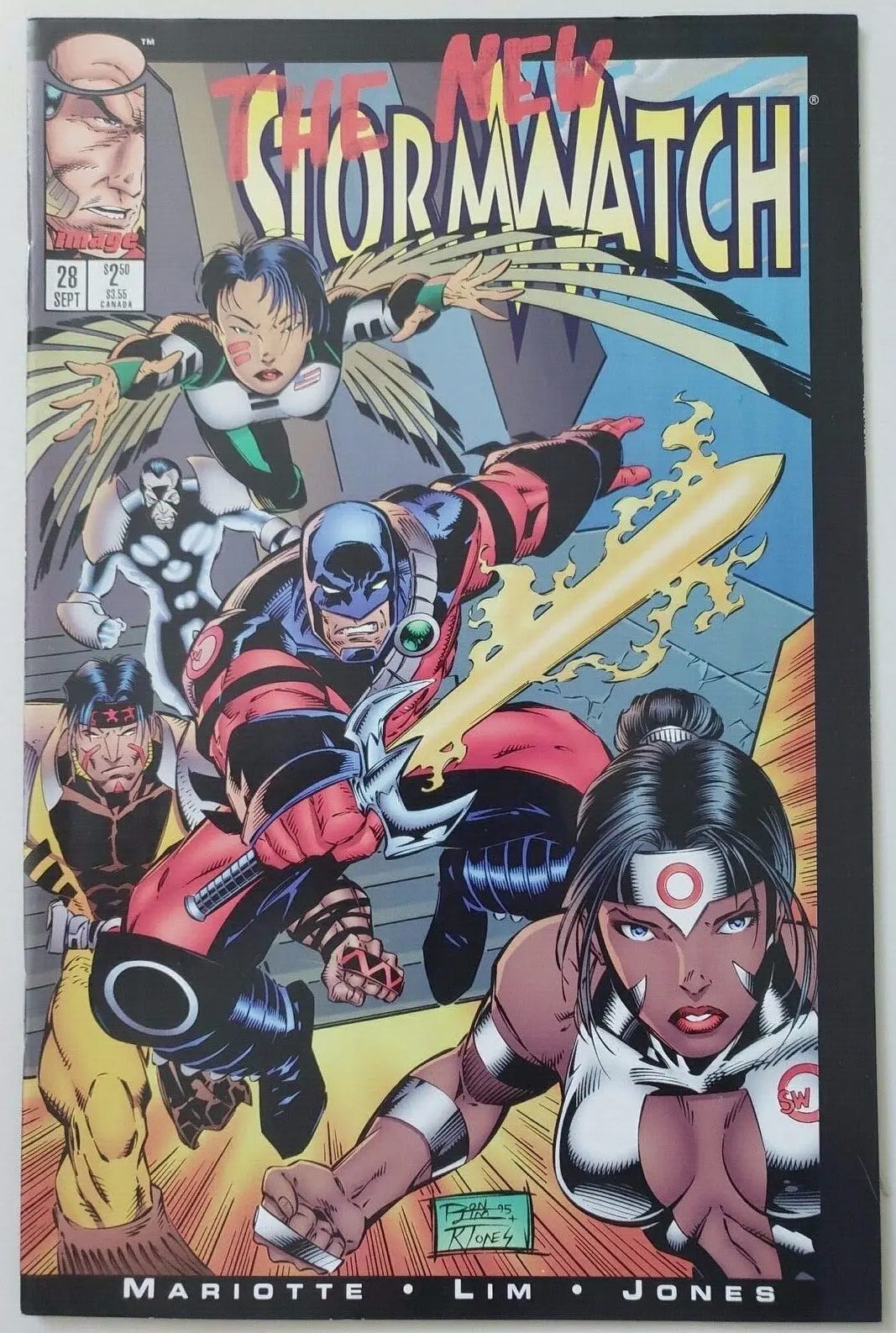
But even before I wrote tie-in novels, I had written work-for-hire projects, because most comics published are also work-for-hire jobs. DC Comics owns Superman, Batman, Wonder Woman, and hundreds of lesser-known characters, including some I created. The most prominent of those is Swift, who started in a team called StormWatch but moved to one called The Authority, and remains active in the ongoing DC Universe (and would likely be in a potential Authority movie). Likewise, Marvel owns Spider-Man, Captain America, Thor, Hulk, the Fantastic Four, etc. DC Comics itself is owned by Warner Bros. Discovery, Inc., and Marvel is owned by The Walt Disney Company.
Those massive entertainment conglomerates (and others) also own TV shows and movies. So writing a script for a Star Wars streaming series, for example, is work for hire. The scriptwriter doesn’t own Cassian Andor, because Disney does. A screenwriter who pens a Batman movie is doing work for hire as well.
The list of projects I’ve done as work for hire is way too long to go into here, but as a brief sampling, I’ve worked on these properties and many more: Buffy, Angel, Supernatural, Charmed, Star Trek, 30 Days of Night, CSI, Narcos, NCIS, Superman, Spider-Man, Zorro, The Phantom, Tarzan, The Shield, Dungeons and Dragons… and that’s not even counting the nearly 200 comics I’ve written, most of which were WFH jobs.
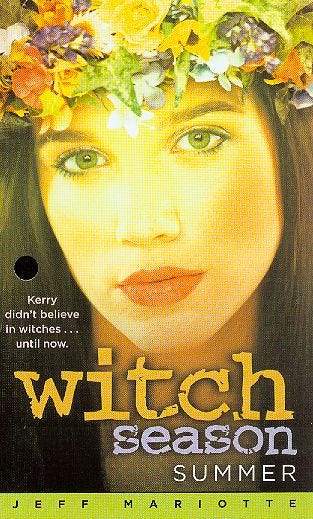
Although my first short-story sale was my own creation (also called creator-owned), it wasn’t until I pitched and sold a young-adult horror series called Witch Season that I owned an intellectual property about which I could write novels. That sold to Simon & Schuster and has been republished many times with different titles and covers—but each time, I get paid, because I own it. THAT is the key difference here. Marvel can hire anybody to write Spider-Man, but nobody gets to write in my Witch Season universe except me (or fanfic writers, but that’s a different topic altogether—and legally, any money they made off their fanfic would belong to me).
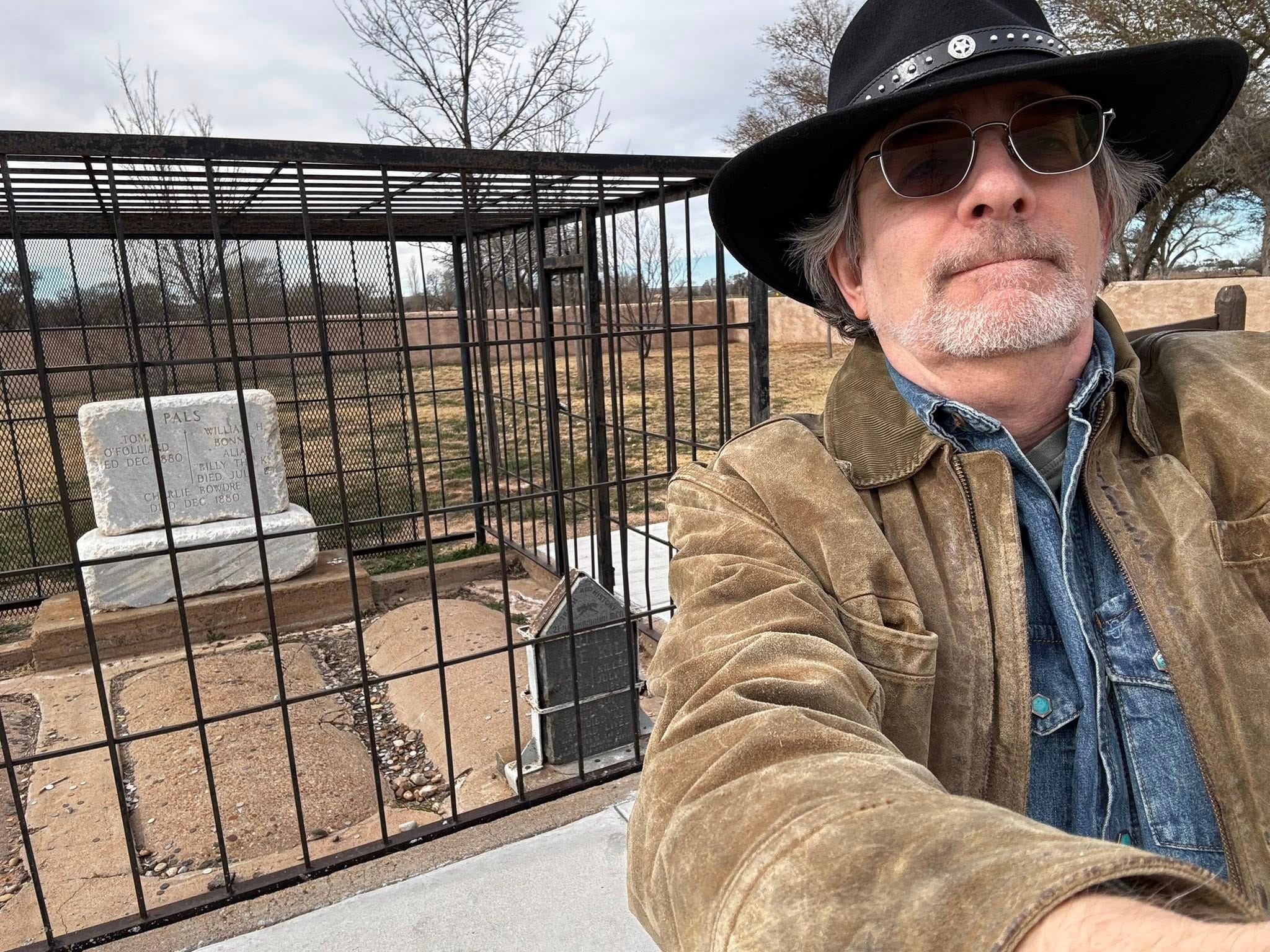
The reason I’m writing about WFH now is that I’ve just written a fairly unusual specimen of it. A publishing company called Dusty Saddle Publishing, which specializes in Westerns, asked me to write a short novel about a famous person from the old West, for a series called America 250. They’re putting out one book a month through 2026, each by a different author, about 12 well-known Westerners, in celebration of the country’s 250th anniversary. The character I chose to write about was Billy the Kid, who remains the most well-known outlaw in American history.
To write it, I did a ton of research. I talked to friends who are Billy the Kid experts, including Bob Boze Bell of True West Magazine, who’s written three books about Billy, and John Fusco, screenwriter of Young Guns and Young Guns II, both of which revolve around Billy. I read book after book, by historians and contemporaries. And I traveled to the part of eastern New Mexico where Billy spent his last months of life (the period I was writing about).
With stacks of books crowding my desk, I dug into the writing. I referred to my own photographs of the region, as well as to historical images. I frequently had to turn to the books for details. I wanted to get Billy as right as I could, all these decades later, and that meant diving deep into his head (as I understand it). I think I succeeded in spinning a good yarn that illuminates various aspects of his life and personality, but that’ll be up to the readers to decide whenever it’s published. (I will keep you informed when I know the pub date). It’s called Cheat the Hangman: A Tale of Billy the Kid (unless the publisher changes the title).
And what makes it WFH is that I don’t own it. All that work inures to the benefit of the publisher. I get paid—you buy a book, I make some money is how that works—but I don’t own the words I wrote. Somebody makes a movie of it? Dusty Saddle gets a big payday. I would likely make better royalties if the movie drove folks to buy the book.
Sound like a raw deal? Some writers would never do WFH. They want to own every word they write. I don’t fault them for that—I like to own my own stuff, too. But I’m used to the WFH world, and I’ve made more money from it over the decades of my career than I have from my creator-owned work.
Work-for-hire writers are a special breed, but there are plenty of us. We even have our own organization, the International Association of Media Tie-in Writers, and our own award, the Scribe Award (which I’ve won four times—once with co-author Steve Niles). We have a website, but it’s down at the moment. Together we’ve written about hundreds, maybe thousands, of the most popular characters from TV, movies, comics, and other media. I even met my brilliant and beautiful wife, Marsheila Rockwell, through the organization, so I’m forever indebted to it.
Me? I love to write. I love to get paid for it. At the moment it’s my only source of income, so I’m glad it’s there. (Buy a book!) Whether it’s something I own, or a property somebody else owns, I give it my all, every time. I’m glad there are those who like to read what I write, and I appreciate every single one of you.
Technically, I did WFH differently on my last novel. I wrote a prequel (Flicking The Bic) that featured the villain (from Scratching The Flint) as the main character plus merging the world of that book with my own novel Ghosts On The Block Never Sleep. I had to sit down, talk to the author about it, and we had to iron out all the details but we came to an agreement that would allow me to do the book the way I did it and maintain the rights to my characters and let them maintain the rights to theirs. That probably never happens, but if Netflix picks up the book we both have to agree on the deal since it merges to universes.
And let me just say I’m absolutely JEALOUS, do you hear me, that you got to write a Mafia book. We need an entire slew of books for that game series, going all the way back to Tommy. (Mafia has been in my life since high school, that’s how long I’ve been playing those games.).
On another note: I used to read comics written by you and they were great.